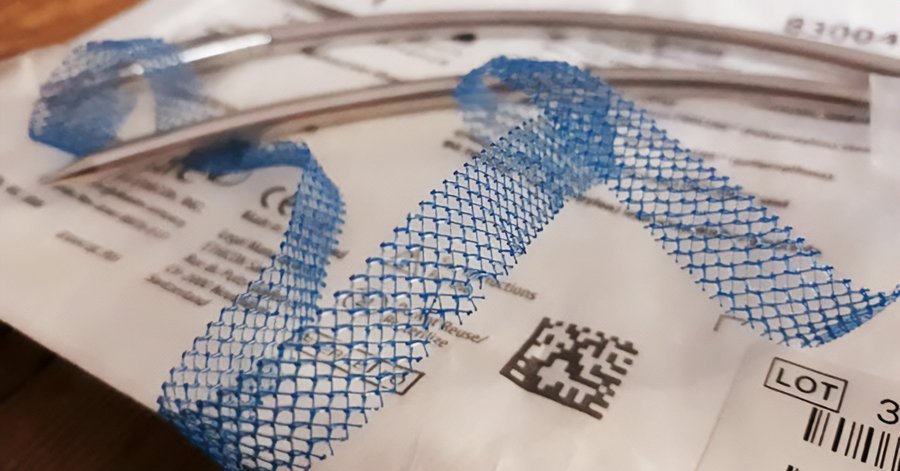
How cheap plastic mesh remains a cash cow
Surgical mesh is generating millions for medical device companies for one simple reason: it is cheap to manufacture and easy to sell.
From prolapse and bladder leaks to hernia repair, breast reconstruction, bowel surgery and even veterinary use, the same plastic products are repackaged and marketed across multiple conditions.
Each relies on short‑term trials that measure early surgical success while failing to capture the full spectrum of complications – which can take up to 20 years to emerge and are rarely logged or followed up.
Mesh slings
Basic synthetic pelvic mesh sling kits to treat bladder leaks or prolapse are sold in the US for about $350 to $700 per unit after discounts, according to figures by Index Box
These products are made from polypropylene synthetic plastic using standardised manufacturing, inexpensive materials and production at scale. Once approved and in routine use, each unit holds strong profit margins.
In countries where patients have limited access to critical reporting, legal records, or long‑running English‑language investigative journalism driven by Sling The Mesh advocacy – these devices can still be marketed as “gold‑standard” medical solutions. This gold standard narrative has been widely challenged by ourselves and also within the ground breaking First Do No Harm report by Baroness Cumberlege.
For many women however, unless they can speak English they will not have access to the criticism of the weak and methodologically flawed scientific literature on which many of these claims are based.
As a result, patients are led to believe – as we did before launching the campaign – this is a low‑risk treatment that dramatically changes lives. Which it can – except in ways we could never have imagined.
Hernia mesh – patients pay. Industry protects itself.
Global hernia repair operations exceed 20 million annually and like pelvic mesh the product is heavily marketed as gold standard.
Most hernia meshes reach the market supported by short‑term studies of six to 24 months. These trials may well show early success but they do not capture complications that can emerge years later, including chronic pain, autoimmune disease and late recurrence – up to 20 years later.
According to Future Market Insights hernia mesh devices were worth $5.10 billion dollars in 2025.
That same report outlines a need for long‑term studies – which on first reading may seem like an important nod to patient safety. But finish the sentence. A closer look makes clear the real purpose is not protection of patients, but protection from litigation.

The push for 5‑year and 10‑year outcome data is not about preventing patient harm it is about protecting manufacturers in the court room.
Industry is facing sustained, high‑volume litigation against hernia mesh. As of April 2026, more than 26,000 hernia mesh lawsuits remained active across multiple US multidistrict litigations, with claims centred on recurrence, chronic pain, migration, and the need for revision surgery. These cases do not hinge on short‑term outcomes. They are won or lost on what happens years after implantation.
That legal reality explains the industry’s sudden demand for long‑term data. It is the inevitable result of putting profits first, patient safety last, and allowing a lucrative product to generate billions withoiut acknowledging the damage left behind.