
Navigating uncertainty – the human impact of pelvic mesh complications
A lack of awareness among GPs and inconsistent referral pathways are among the biggest frustrations faced by women seeking support for pelvic mesh complications, a new study found.
For women searching for answers, repeated tests can feel like another obstacle in a healthcare system where uncertainty about symptoms, causes and treatments remains widespread – for both women and their doctors.
A recent study by researchers from Anglia Ruskin University and Cambridge University Hospitals NHS Trust, drawing on interviews with women from the Cambridge Mesh Patient Engagement Panel, explored how patients and clinicians experience uncertainty surrounding pelvic mesh complications.
Many women reported struggling to determine whether their symptoms were linked to the mesh and described feeling dismissed, unheard and left to navigate fragmented healthcare pathways. Delays in referrals, repeated investigations and inconsistent information often left patients feeling as though they were “floating about in the system.”
Clinicians also faced uncertainty when diagnosing symptoms and recommending treatments. The study found that specialist mesh services, multidisciplinary teams, and person-centred communication helped patients feel supported and validated.
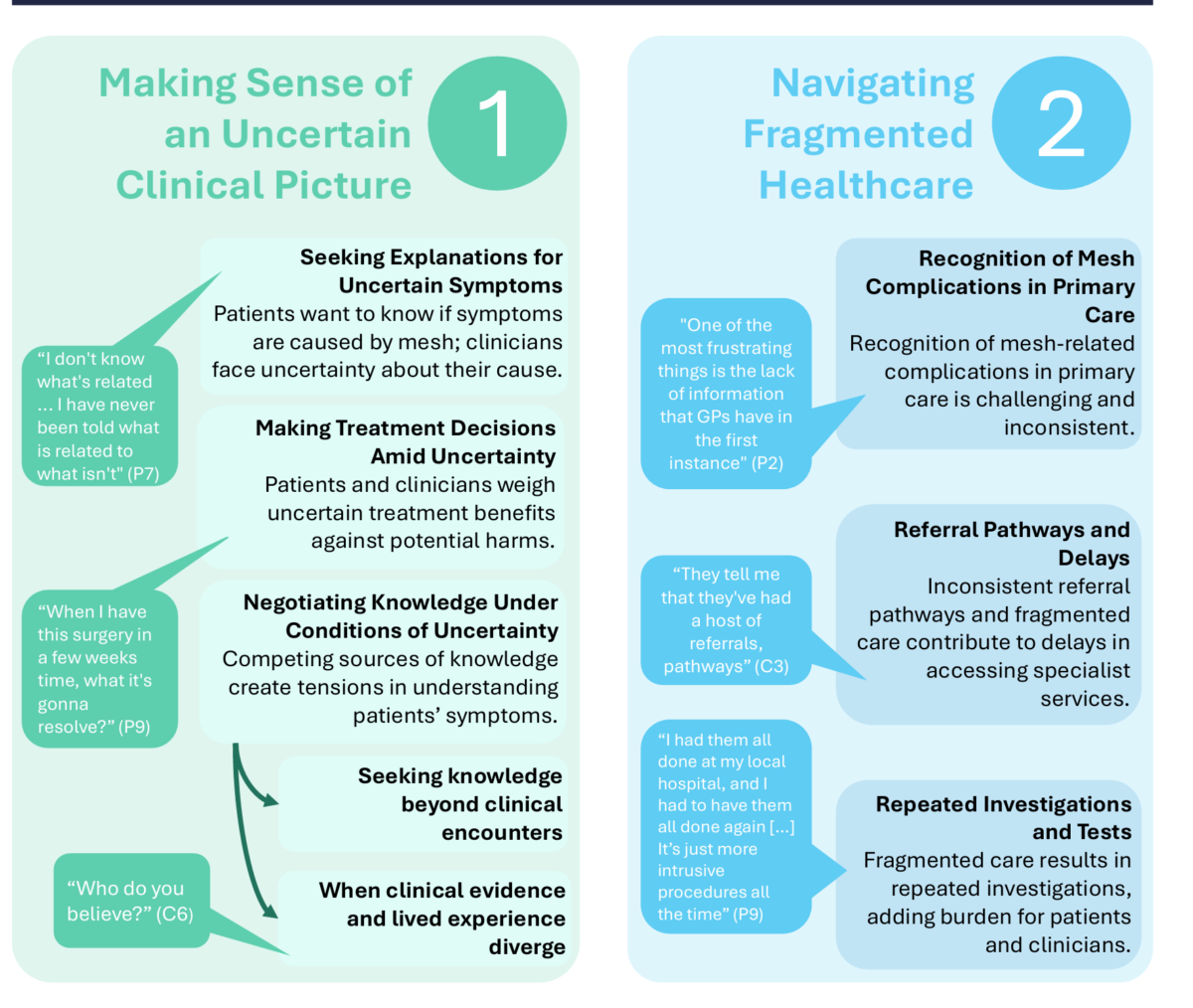
The findings highlight that uncertainty is not only a clinical issue but also a systems issue. Improving coordination of care, listening to patients, and providing honest communication can help women navigate complex healthcare journeys and make informed decisions about their treatment.
Pelvic mesh implants were widely used to treat stress urinary incontinence and pelvic organ prolapse, with more than 127,000 women receiving mesh implants in England between 2008 and 2017. However, concerns about serious complications led to restrictions on their use in the UK in 2018.
Read the full study below