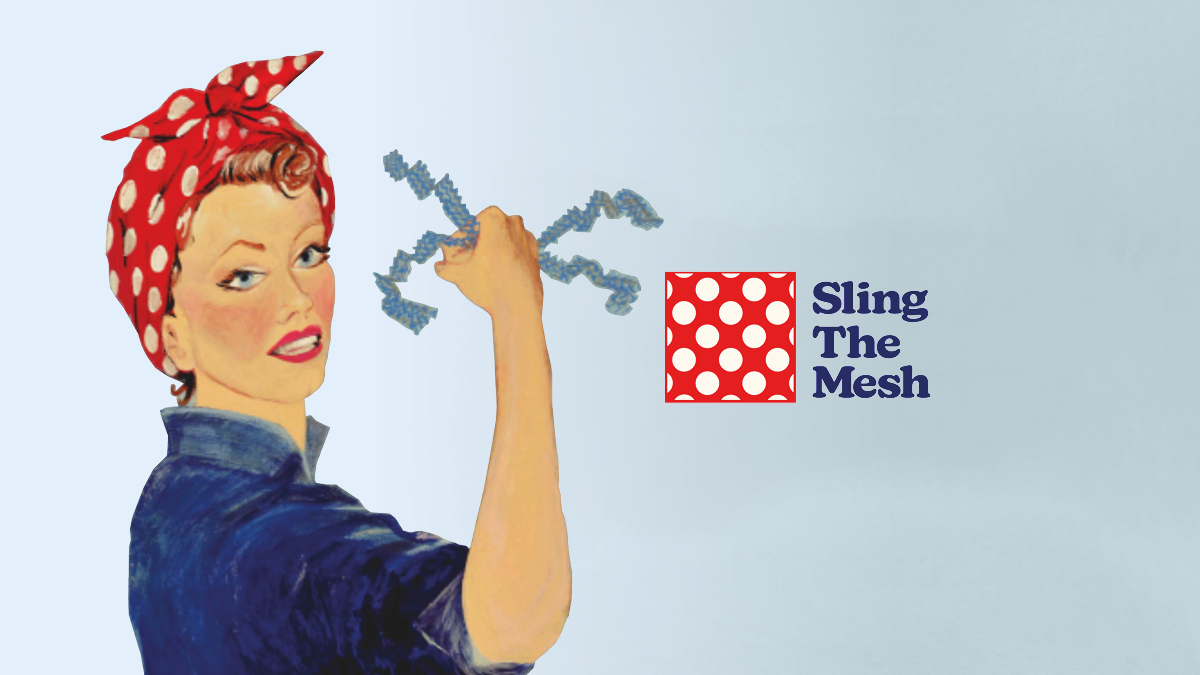
Eleven years of people power and we are now a registered charity
When I set up Sling The Mesh in 2015, just weeks after undergoing TVT bladder mesh sling surgery, I naively thought this whole mesh mess would be sorted in a couple of years. Five at the absolute max. I had no idea what lay ahead.
Back then, I thought the challenge was straightforward: raise awareness, support injured women, ban mesh and persuade healthcare leaders to listen. I certainly didn’t imagine that 11 years later I’d still be campaigning and helping to run a registered charity.
Nor did I realise how little I knew.
Terms like pre-market approval, post-market surveillance, adverse event reporting, data capture and regulatory oversight meant absolutely nothing to me. Like most patients, I trusted that someone, somewhere, was making sure medical devices were properly evaluated and monitored.
What I discovered was far more nuanced and complicated.
Sling The Mesh began as a campaign focused on women harmed by pelvic mesh used to treat stress urinary incontinence and pelvic organ prolapse. But men and women started contacting us about complications from hernia mesh. Then women affected by breast mesh, used after mastectomy reconstruction or cosmetic procedures.
The pattern was unmistakable.
Different devices. Different operations. Different patients. Same plastic surgical mesh material and the same stories of pain, autoimmune diseases, disability, loss of work, family breakdown. financial hardship. Moreover, the dismissal, denial and gaslighting announced itself loud and clear.
Today our support community has more than 13,000 members from around the world affected by many different types of surgical mesh. A patient movement united by shared experiences and a desire for better healthcare.
One of the biggest shocks was discovering the gap between what many research papers reported and what patients were living through every day.
Thousands of studies showed mesh slings successfully stopped bladder leaks. Yet there are thousands of women in the support group who are a success in the official statistics but are now using wheelchairs or walking with sticks, suffering chronic pain, and struggling to live normal lives.
The operation had fixed the original problem. But it had caused devastating new ones. How could these procedures continue appearing in the literature as success stories when so many patients were paying such a heavy price?
Welcome to the uncomfortable reality that research often measures what researchers decide to count. If studies only record if a woman’s bladder leakage improved, while failing to adequately capture serious complications and long-term outcomes, then the picture presented can be dangerously incomplete.
And some of the complications are like a dystopian horror story. For pelvic mesh there are women where the mesh has sliced through their vaginal walls, through their urethra and into bladders and bowels requiring surgical removal and now living with a stoma bag. For hernia mesh there are men for whom the plastic material has cut their spermatic cord. How can this be happening?
The realisation about the huge black hole of missing data led Sling The Mesh to scrutinise research methodologies, secret industry funding to key opinion leaders, questioning regulatory systems and working alongside academics who were equally committed to improving patient safety. We learned that patients bring expertise too. Perhaps not the expertise of textbooks or journals, but the expertise that comes from living with the consequences of healthcare decisions every single day.
Since 2015, the campaign has been funded largely from our own pockets. The website costs. Domain renewals. Train tickets to meetings. Printing leaflets and banners. Attending conferences. Supporting media work. All those hidden expenses that quietly mount up over time.
Much of it was paid for by volunteers who believed in the cause. People travelling the country and flying in from Northern Ireland and trains down from Scotland at their own expense. Giving up evenings and weekends. Using annual leave to attend meetings. Calling in favours from friends and accepting “mates’ rates” wherever possible.
We did it because it is the right thing to do. But there comes a point where goodwill alone is no longer enough.
The biggest lightbulb moment came when Sling The Mesh was among the 2024 Tenacious Award winners. Being recognised among so many remarkable organisations opened my eyes to what might be possible if we could build something more sustainable.
For years I had resisted becoming a charity. I worried that formalising the organisation might somehow change its spirit. Sling The Mesh had always been driven by passion, independence and a determination to do the right thing.
But eventually I realised that becoming a charity wasn’t about changing who we are. It was about giving us the tools to continue.
With the support and funding that followed, we were able to fund an important piece of academic research into pelvic mesh complications – watch this space for when it publishes – and we began the process of establishing Sling The Mesh as a registered charity and applying for longer-term funding opportunities, including support from the National Lottery.
It is a whole new world. My background is journalism, photography, communications. Charity governance and fundraising were never part of the plan. Like so much of this journey, I’ve had to learn as I go.
Perhaps the most important lesson of all though is that real change starts with people. And while you may be small vs. giant institutions you can still be the mosquito in the room that nobody can ignore.
Ordinary people who refuse to accept that things cannot be better. People prepared to share their experiences, support strangers and stand together around a common goal.
And whatever comes next, it will be built on the same thing that got us here in the first place:
People power.
With heartfelt thanks to our incredible volunteer admin team, supporters, campaigners and the thousands of patients who have trusted us with their stories.
Support Sling The Mesh
If you believe in what we do, please consider supporting our work. Every donation, however small, helps us continue representing patients, supporting those harmed by mesh and pushing for safer healthcare.
JustGiving Link. Sling The Mesh – JustGiving
Donate at checkout with Easy FundRaising
You can choose Sling The Mesh when selling items on eBay to donate a percentage of the sale.